API Connections Linking Payment Networks to Retail Software for Secure Recurring Transactions in the United States
Parker Butler · Nov 4, 2026
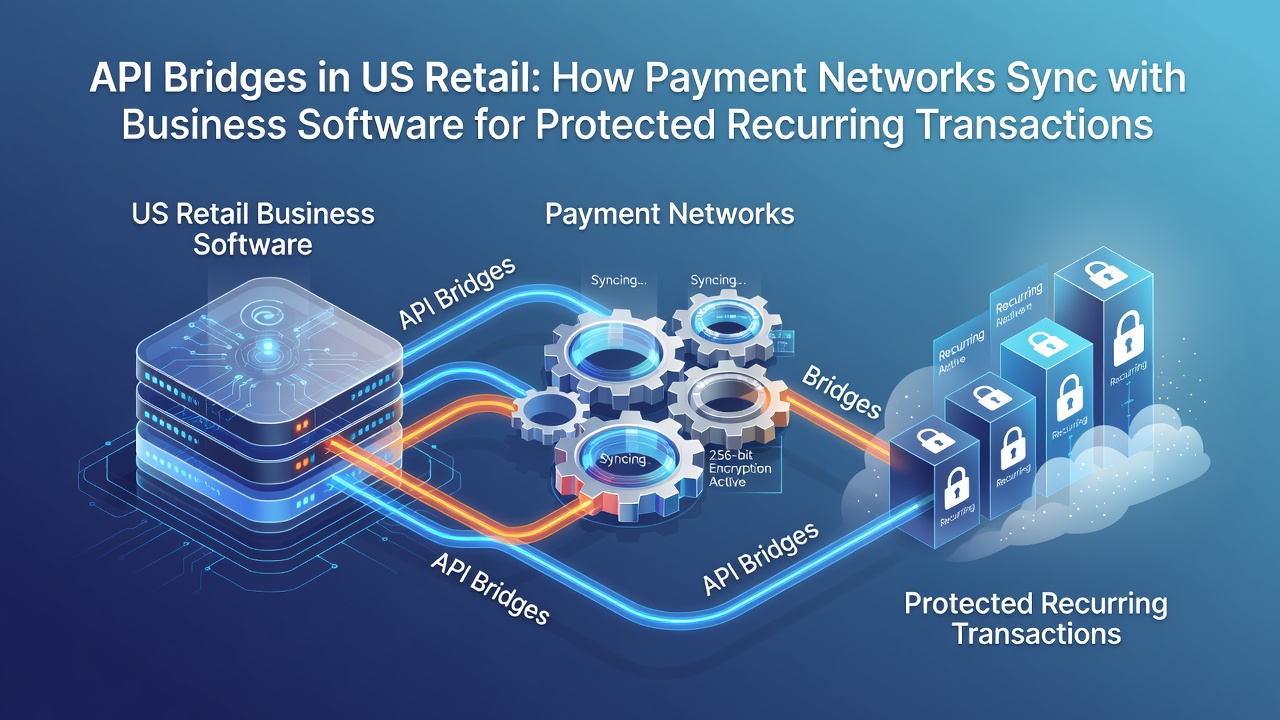
API Connections Linking Payment Networks to Retail Software for Secure Recurring Transactions in the United States
Payment networks in the United States rely on API connections to exchange data with retail business software during recurring transaction cycles, and these interfaces handle authorization requests while maintaining compliance standards for customer data protection. Retail operators use these bridges to automate charge processing across credit card rails and ACH channels without manual intervention at each billing interval.
Core Components of API Synchronization
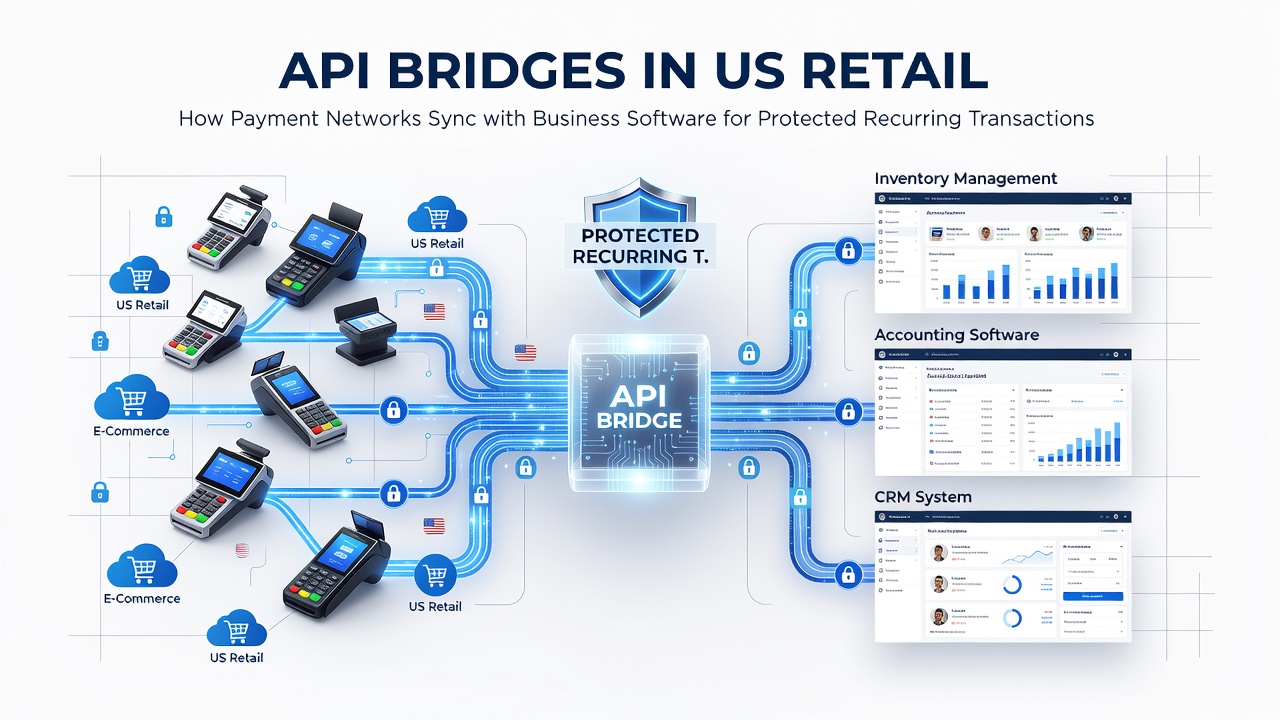
Business software platforms connect to payment processors through standardized endpoints that transmit customer tokens, subscription metadata, and transaction amounts in structured formats, while the receiving systems validate credentials against issuer databases before approving or declining requests. Data flows include encrypted payloads that carry details such as billing frequency, amount adjustments, and failure retry logic, and these exchanges occur in milliseconds during peak processing windows. Observers note that synchronization protocols align timestamps across systems to prevent duplicate charges when network latency affects confirmation messages.
Retail systems often embed webhook listeners that receive real-time status updates from payment networks, allowing inventory adjustments and customer notifications to trigger automatically once a recurring deduction completes or fails. These listeners parse response codes that indicate insufficient funds, expired instruments, or fraud flags, and the software then routes follow-up actions like dunning sequences or payment method updates back through the same API channel.
Security Layers in Recurring Payment Flows
Tokenization remains central to protected operations because primary account numbers never traverse the full path between retail software and issuing banks, and instead reference identifiers replace sensitive strings during each sync cycle. API bridges enforce mutual TLS certificates and payload signing requirements that verify both endpoints before any data exchange begins, and these measures reduce exposure during high-volume subscription renewals. Researchers at academic institutions have documented how signature verification prevents replay attacks when timestamps and nonces accompany every recurring authorization request.
Access controls within the connected systems limit which software modules can initiate charges or retrieve settlement reports, and role-based permissions ensure that only designated billing services reach the payment network endpoints. Audit logs capture each API call with details on originating IP addresses, request payloads, and response times, creating traceable records that support regulatory reviews scheduled for late 2026. November 2026 marks the anticipated rollout of updated data retention guidelines that will require extended logging periods for recurring transaction APIs across US retail operators.
Integration Patterns Across Retail Platforms
Many subscription management tools embed pre-built connectors that map internal customer records to payment network schemas, and these connectors handle currency formatting, tax calculations, and address verification before forwarding requests. Custom middleware layers appear in larger retail environments where legacy accounting packages require additional translation steps to communicate with modern API gateways. Those who manage these setups report that batch scheduling features allow charges to queue during off-peak hours, reducing strain on both the payment rails and the connected business software.
Testing environments replicate production API behavior through sandbox endpoints that simulate declines, partial approvals, and network timeouts, enabling developers to validate retry logic without risking live customer data. Production deployments then switch to live credentials after certification processes confirm that the bridge meets network-specific formatting and security benchmarks.
Regulatory Alignment and Compliance Mechanisms
US operators coordinate API usage with requirements outlined by the Federal Reserve payments framework, which emphasizes consistent authorization practices for recurring debits across card and ACH channels. Separate guidelines from the European Central Bank on similar synchronization technologies provide comparative benchmarks that some American platforms review during system audits. Compliance teams map each API field to mandated disclosure rules so that customers receive advance notice of upcoming charges through the integrated software interfaces.
Encryption standards mandated for data in transit and at rest align with specifications published by the PCI Security Standards Council, and annual assessments verify that API bridges maintain these protections during recurring transaction handling. Failure to meet these benchmarks can interrupt connectivity between payment networks and retail systems until remediation occurs.
Operational Scaling Considerations
High-volume retailers monitor API throughput metrics to identify bottlenecks that appear during renewal waves, and they adjust concurrency limits or add regional endpoints to maintain response times. Rate limiting on the network side prevents overload when thousands of subscriptions align on the same billing date, and retail software incorporates exponential backoff algorithms to respect these constraints. Observers note that monitoring dashboards display success rates, average latency, and error distributions that help teams prioritize infrastructure adjustments.
Disaster recovery provisions include secondary API endpoints hosted in separate geographic zones, allowing traffic to reroute automatically if primary connections experience outages. These failover mechanisms preserve continuity for recurring billing cycles that cannot tolerate extended interruptions without affecting revenue recognition.
Conclusion
API bridges continue to serve as the primary mechanism for synchronizing payment networks with retail business software during protected recurring transactions in the United States, and ongoing refinements in security protocols and regulatory expectations shape how these connections evolve through 2026 and beyond. Data exchange patterns remain consistent across platforms while adapting to new compliance layers and scaling demands from subscription-based retail models.