Banking APIs Streamline Automated Collections for US Retail Platforms Under Data Security Mandates
Drew Schmid · Aug 16, 2026
Banking APIs Streamline Automated Collections for US Retail Platforms Under Data Security Mandates
Banking APIs have become central to how US retail platforms manage automated collections while meeting strict data security mandates that govern customer financial information. These application programming interfaces allow direct connections between retail systems and banking institutions so recurring payments process without intermediaries that might introduce additional points of vulnerability. Observers note that platforms handling high volumes of repeat transactions rely on these tools to maintain compliance with rules set by bodies like the Federal Reserve and NIST cybersecurity frameworks.
Retail operations in the United States face ongoing requirements to protect payment data during every stage of collection. Banking APIs support this by enabling token-based authorization where account details never pass through the retail platform itself. Instead the API routes requests to the bank for verification and execution which reduces exposure under mandates such as those outlined in data protection standards. Research from industry reports indicates that adoption rates for these integrations rose steadily through 2025 with further acceleration expected by August 2026 as more states align their consumer protection laws with federal guidelines.
How Banking APIs Facilitate Automated Deductions
Automated collections through banking APIs operate by establishing secure endpoints that pull funds on scheduled dates. Retail platforms send collection instructions via encrypted channels and the API handles authentication with the customer's bank using pre-approved consent tokens. This process supports both ACH transfers and real-time payments while keeping sensitive routing and account numbers isolated from the merchant environment. Those who manage subscription-based retail models often discover that API-driven flows cut down on manual reconciliation because transaction status updates arrive directly from the financial institution.
Data security mandates require encryption at rest and in transit along with regular audits of access controls. Banking APIs address these needs by incorporating OAuth 2.0 and mutual TLS protocols that limit data exposure during each collection cycle. Experts have observed that platforms integrating these APIs can demonstrate compliance more readily during examinations because the architecture inherently segments customer information away from retail databases. Figures from payment network analyses reveal that error rates in automated deductions drop when banks provide real-time status feedback through the same API connections.
Security Mandates Shaping API Implementations
US data security mandates continue to evolve with emphasis on minimizing breach risks in recurring billing environments. Banking APIs must align with requirements that include multi-factor authentication for account access and detailed logging of every transaction attempt. Retail platforms that adopt these interfaces gain the ability to map their collection processes against regulatory checklists without storing full bank credentials on their own servers. This separation proves useful when audits examine how customer data moves between systems.
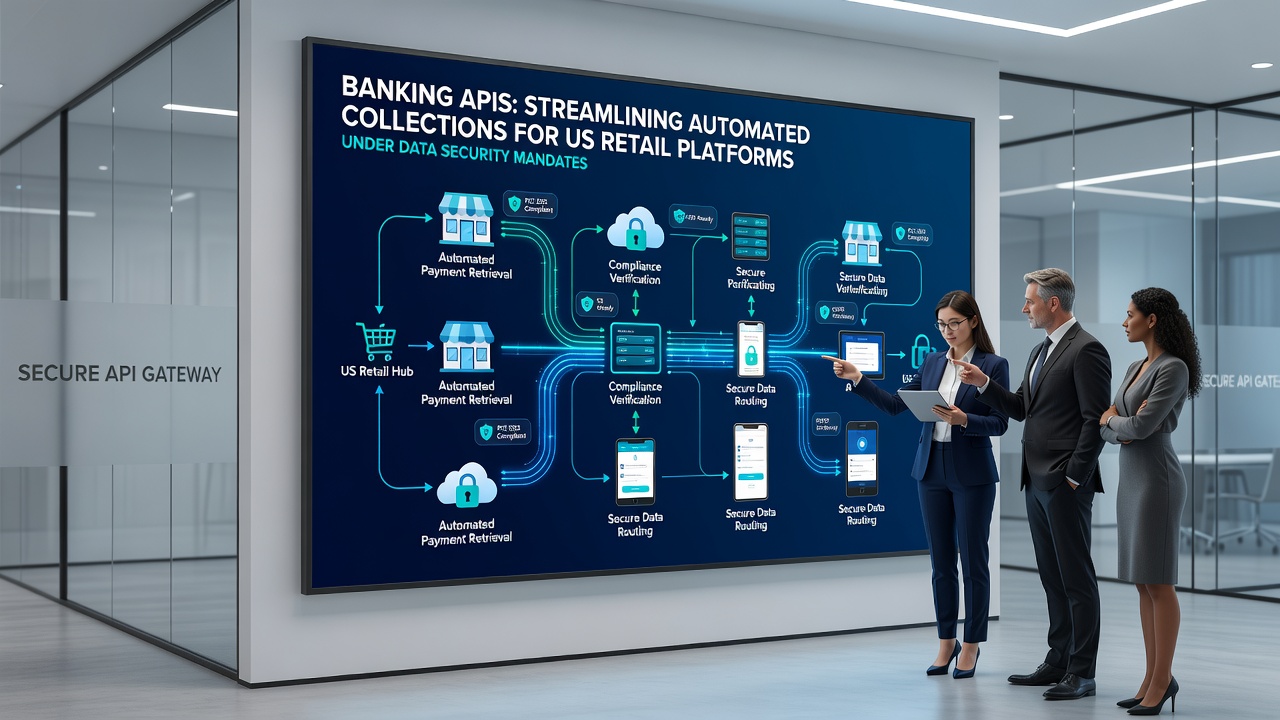
Platforms operating across multiple states encounter varying interpretations of federal rules yet banking APIs provide standardized methods for consent management that satisfy most jurisdictions. According to NIST cybersecurity resources organizations benefit from architectures that isolate payment functions from core retail operations. The result appears in reduced scope for compliance assessments because fewer systems touch raw financial data during automated cycles.
Integration Patterns Across Retail Platforms
Retail platforms integrate banking APIs through middleware layers that translate internal billing schedules into API calls. Developers configure webhooks to receive instant notifications when a bank approves or rejects a collection attempt which allows the platform to update customer records without polling. This event-driven approach keeps systems responsive while maintaining audit trails required under security mandates. Observers note that companies scaling their operations across regions often standardize on a single API provider to simplify vendor management and security reviews.
Case examples show that platforms handling both one-time and recurring charges use banking APIs to unify their collection logic. A subscription service might trigger an ACH pull through the API on the first of each month while also supporting instant verification for new sign-ups. The API layer manages consent revocation so customers who cancel can halt future deductions through their bank interface without contacting the retailer directly. This capability aligns with consumer protection elements embedded in current data security expectations.
Operational Benefits Under Compliance Constraints
Retail platforms report measurable gains in collection efficiency once banking APIs replace older batch file methods. Automated retry logic built into many API offerings reduces failed deductions by attempting collections at optimal times based on bank feedback. Those managing cash flow for inventory planning find that predictable success rates help forecast revenue more accurately. Data from network operators shows that platforms using direct bank connections experience fewer disputes because transaction records include clear timestamps and authorization details.
Security mandates require platforms to demonstrate that customer financial information remains protected throughout its lifecycle. Banking APIs support this by limiting data retention on the retail side and relying on bank-hosted tokens for future collections. This model reduces the attack surface that examiners review during assessments. Platforms that document their API usage patterns can often complete compliance certifications in shorter timeframes compared with legacy systems that store account details internally.
Conclusion
Banking APIs continue to reshape how US retail platforms execute automated collections while satisfying data security mandates. Direct integrations with financial institutions allow platforms to process recurring payments through encrypted channels that isolate sensitive information. As regulatory expectations tighten through 2026 and beyond these interfaces provide the technical foundation for compliant and efficient operations across diverse retail models. Platforms that align their systems with established API standards position themselves to meet evolving requirements without disrupting customer billing cycles.