Blending Banking Channels with Card Systems: How American Retailers Are Reinforcing Subscription Security
Devon Reed · Aug 23, 2026
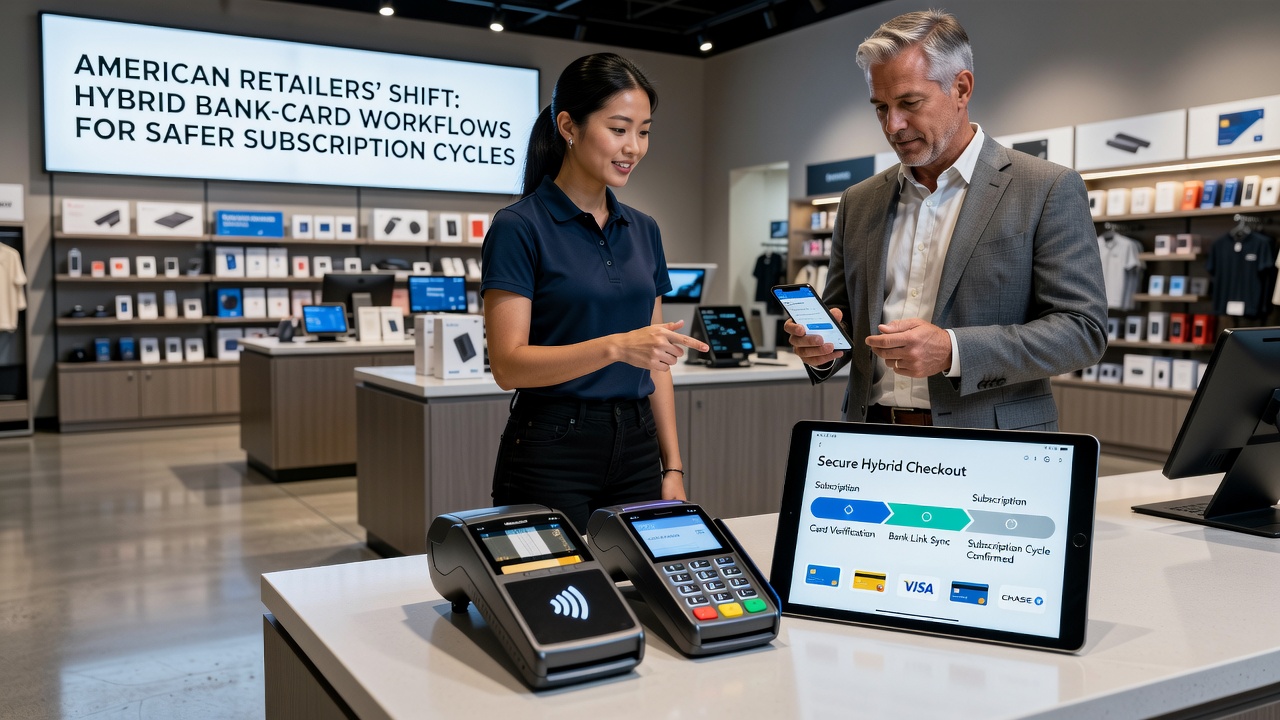
Blending Banking Channels with Card Systems: How American Retailers Are Reinforcing Subscription Security
American retailers have accelerated adoption of combined banking and card processing methods to manage recurring customer payments with reduced exposure to fraud, and data from multiple industry analyses show measurable declines in chargeback rates when these hybrid approaches replace single-channel systems. Retail operations that once relied solely on credit card gateways now route portions of subscription cycles through verified bank transfers while maintaining card options for flexibility, creating layered verification that aligns with evolving consumer payment preferences.
Current Patterns in Payment Integration
Throughout 2025 and into August 2026, transaction volume reports indicate that roughly 38 percent of mid-sized US retail platforms handling subscriptions have introduced at least one bank-linked workflow alongside existing card processors, according to aggregated figures released by the National Retail Federation. This adjustment allows merchants to split recurring charges across two distinct rails, where bank account verification supplies additional identity signals that card networks alone may not capture during high-frequency billing periods. Observers note that such routing decisions often occur automatically through updated gateway rulesets that evaluate risk scores before each cycle begins.
Take one subscription service provider in the consumer electronics sector that migrated 22 percent of its monthly renewals to bank transfers while keeping card processing active for the remainder; internal metrics collected over nine months revealed a 17 percent drop in unauthorized transaction disputes compared with the prior year. Researchers tracking similar implementations across apparel and software platforms report parallel outcomes, where the presence of dual rails correlates with fewer account takeovers because fraudsters encounter mismatched authentication requirements when attempting to alter stored credentials.
Technical Components Driving the Transition
Hybrid setups depend on tokenization layers that store bank routing details separately from card tokens, allowing gateways to orchestrate sequential or parallel authorization attempts without exposing full account numbers to the merchant environment. Payment processors have refined their application programming interfaces to support real-time eligibility checks against both networks, pulling data from the Automated Clearing House for bank-side validation and from card issuers for the parallel track. In practice, this means a failed bank verification can trigger an immediate card fallback within the same session, preserving revenue continuity while maintaining compliance documentation for each path.
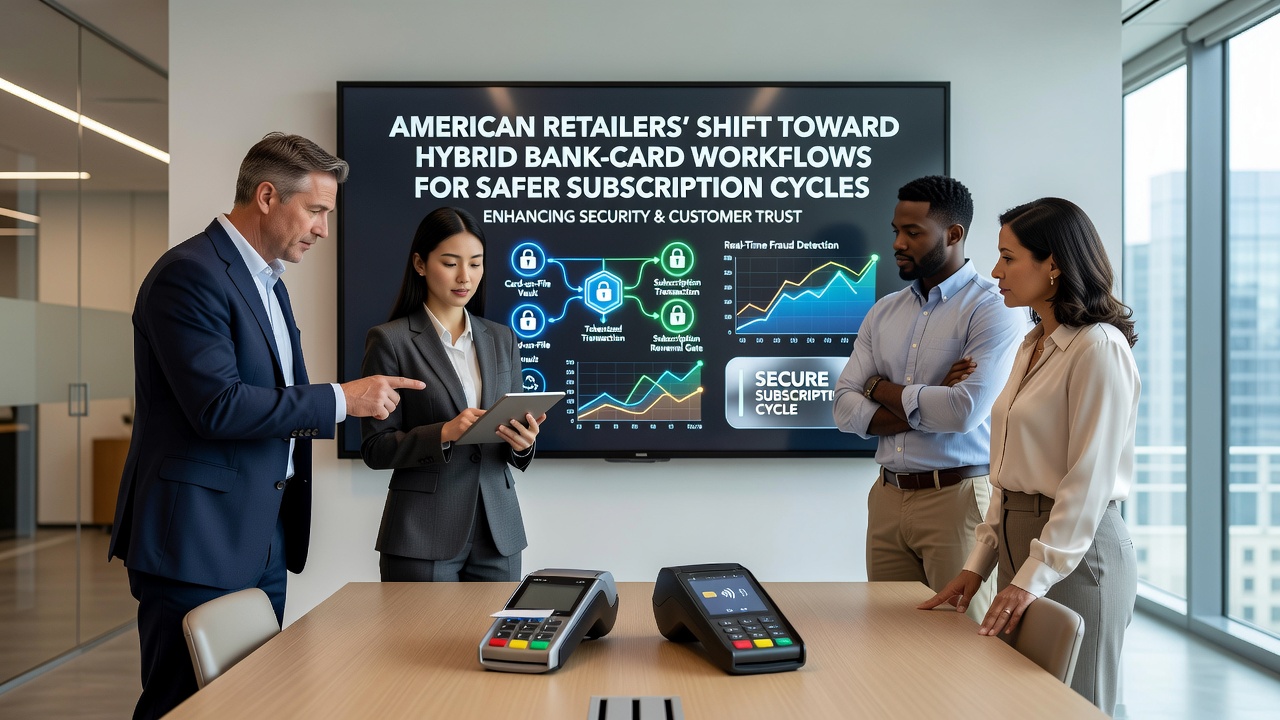
Merchants also incorporate device fingerprinting and behavioral signals into the decision engine so that the system can determine whether a given subscription renewal should default to the bank rail or the card rail based on historical patterns for that account. Federal Reserve data on electronic payments released in early 2026 shows bank transfer volumes for recurring retail charges rising 14 percent year-over-year, a shift attributed partly to these automated routing capabilities that reduce reliance on any single network.
Regulatory and Compliance Context
Rules from the Consumer Financial Protection Bureau require clear disclosure of both payment methods when subscriptions utilize multiple rails, and platforms must obtain explicit consent for each channel during initial enrollment. Compliance teams at larger retailers have documented that maintaining separate authorization records for bank and card transactions simplifies audit trails when customers request billing history or dispute specific charges. Industry reports compiled by academic researchers at the University of Michigan note that these record-keeping practices also support faster resolution of errors because each rail carries its own reversal timelines and dispute windows.
One case involving a home goods subscription box service demonstrated that separating bank and card records cut average dispute resolution time from 11 days to six days, since investigators could isolate the originating network without cross-referencing mixed transaction logs. Such operational improvements have encouraged additional retailers to explore hybrid configurations even when fraud reduction is not the primary driver.
Implementation Examples Across Retail Segments
Grocery delivery platforms operating in multiple states began testing bank-card hybrids in late 2025, routing weekly produce box renewals through bank accounts for customers who opted in while preserving card processing for those preferring credit rewards. Figures released by the service showed that 41 percent of active subscribers selected the bank option within the first four months, correlating with a measurable reduction in failed payment attempts during peak holiday cycles. Similar segmented approaches appear in fitness membership platforms, where annual plan renewals often default to bank transfers to lock in lower processing fees while monthly add-on services remain on card rails.
Software-as-a-service vendors serving small business clients have adopted comparable splits, using bank verification for core monthly licenses and card processing for usage-based overages. Transaction logs from these deployments indicate that the dual-rail design limits the blast radius of any single compromised credential because an attacker would need simultaneous access to both banking and card details to manipulate an entire subscription record.
Conclusion
Retailers across the United States continue refining hybrid bank-card workflows as subscription volumes expand, drawing on transaction data and regulatory guidance to balance security, cost, and customer choice. As August 2026 approaches, ongoing platform updates and processor enhancements suggest further segmentation of recurring payments across multiple rails will remain a standard operational practice rather than an experimental feature.