Building Reliable Bridges from Customer Accounts to Business Income in Subscription-Based American Markets
Devon Reed · Aug 25, 2026
Building Reliable Bridges from Customer Accounts to Business Income in Subscription-Based American Markets
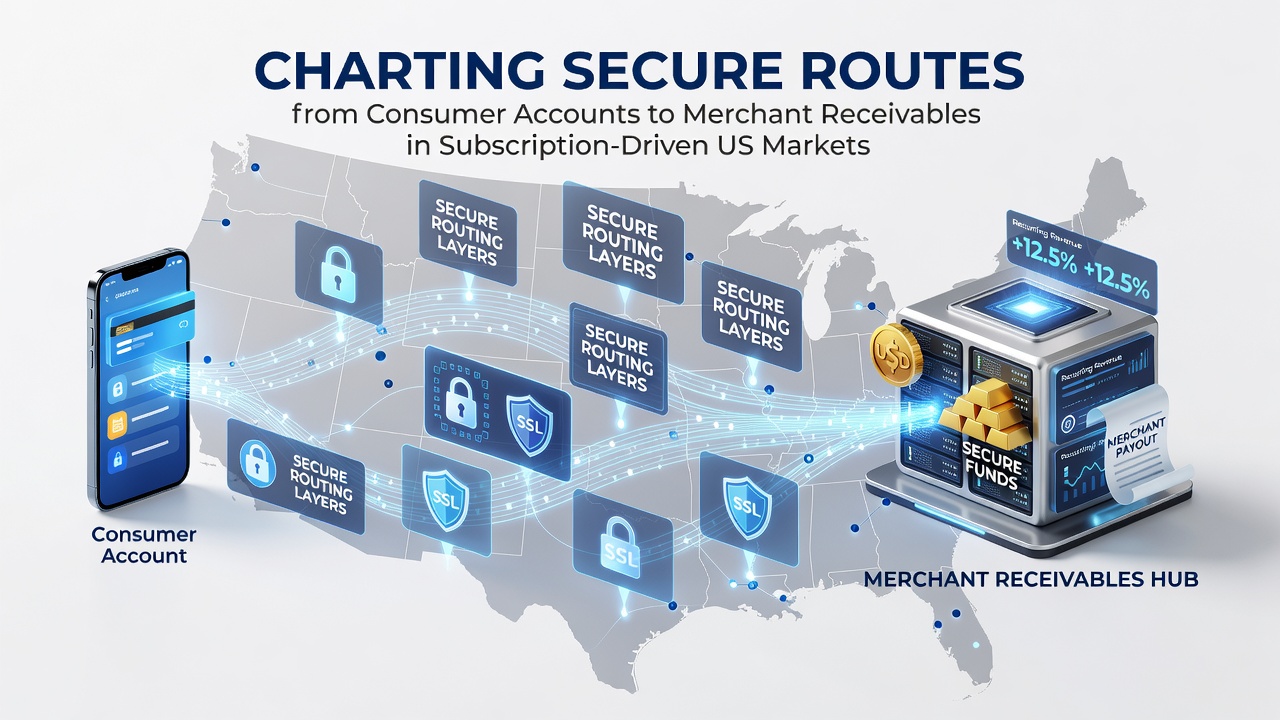
Subscription services across the United States rely on structured connections that move funds from individual bank accounts straight into merchant settlement systems, and these pathways incorporate multiple verification stages to maintain accuracy during recurring billing cycles. Data from industry reports indicate that subscription models generated over 150 billion dollars in recurring revenue during 2025, with projections showing continued growth through the following year. Observers note that companies establish these links through standardized banking protocols that confirm account ownership before any charges occur, reducing mismatches that could disrupt cash flow for merchants.
Verification Layers in Account Connections
Financial institutions apply several checks when linking consumer accounts to subscription platforms, including routing number validation and account status reviews that occur in real time. Researchers at major clearing networks report that these steps process millions of authorization requests daily, with success rates exceeding 98 percent when proper protocols remain in place. In August 2026, several banks expanded their verification APIs to include additional security tokens, allowing merchants to confirm details without exposing full account numbers during setup.
Those who manage subscription billing systems often coordinate with payment processors to embed these checks into onboarding flows, creating a sequence where consumers authorize access once and subsequent deductions follow automatically. Studies from the Federal Reserve show that such pre-authorizations cut processing errors by approximately 40 percent compared to manual entry methods used in earlier decades. Federal Reserve data further highlights how these efficiencies support higher volumes of recurring transactions without proportional increases in operational overhead.
Reconciliation Processes for Merchant Receivables
Once funds leave consumer accounts, reconciliation systems track each deduction through to merchant deposit accounts using unique identifiers assigned at the authorization stage. This tracking allows businesses to match incoming amounts against expected subscription renewals, with automated reports flagging any discrepancies within hours of settlement. Experts observe that platforms handling high subscription volumes integrate these systems directly with accounting software, enabling daily visibility into receivables without manual intervention.
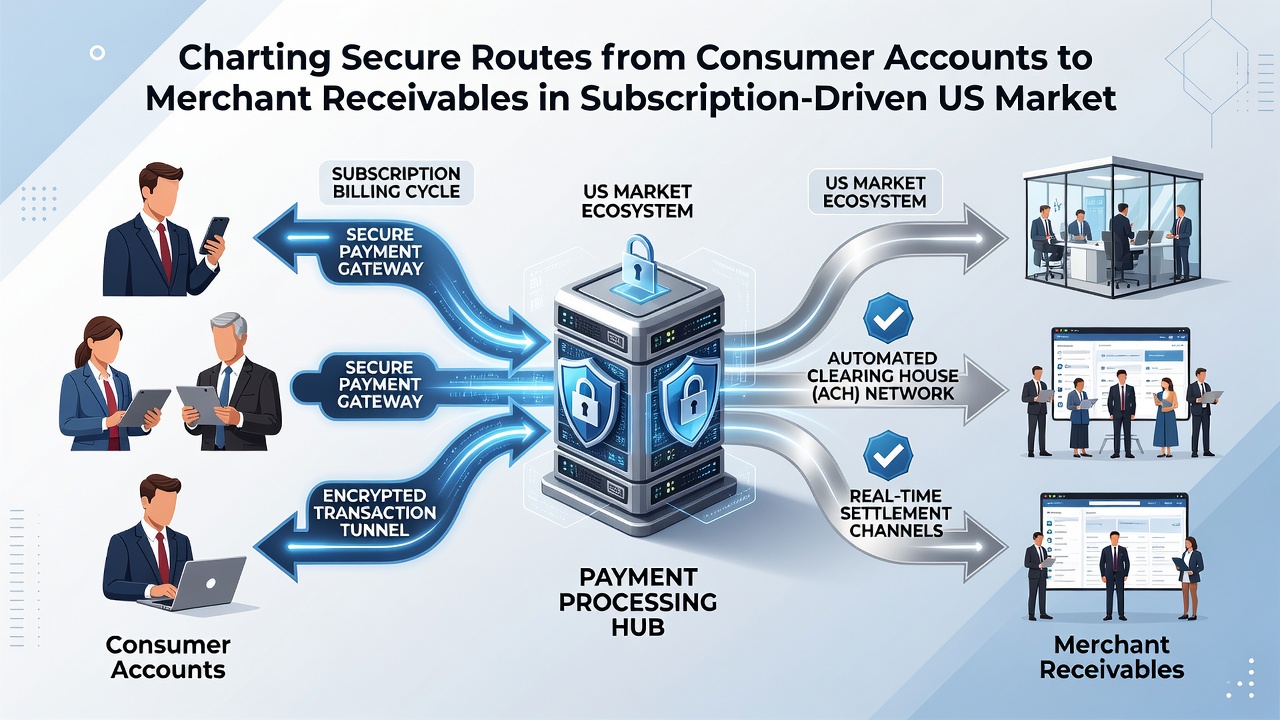
Clearing timelines vary by institution, yet most domestic transfers complete within one to two business days under current network rules. According to analyses from the Bank for International Settlements, US markets maintain settlement speeds that align closely with those in Canada and Australia, where similar subscription ecosystems operate under comparable regulatory expectations. Merchants benefit from these timelines because predictable deposit schedules help with inventory planning and payroll management in subscription-driven operations.
Regulatory Updates Affecting Route Security
Regulatory bodies in the United States continue to refine guidelines around consumer account access, with recent emphasis on consent documentation and data retention periods. The Consumer Financial Protection Bureau released updated compliance examples in early 2026 that clarify how platforms should record authorization timestamps and scope of recurring access. Companies that align their systems with these examples report smoother audits and fewer disputes during periodic reviews.
Cross-border comparisons reveal that frameworks from the European Banking Authority and the Australian Securities and Investments Commission share overlapping requirements around transparency, though implementation details differ by jurisdiction. US operators who study these models often adopt compatible logging practices that satisfy multiple standards simultaneously, reducing the need for region-specific adjustments when expanding internationally.
Integration Patterns Across Subscription Platforms
Many subscription services embed account connection tools directly into their checkout interfaces, allowing customers to complete verification without leaving the primary application. This approach uses secure redirects to banking portals where users confirm details, after which the platform receives only a tokenized reference for future use. Observers note that this method maintains separation between sensitive account data and merchant environments, satisfying both operational and compliance needs.
Take one platform that processes monthly software subscriptions for thousands of users, where integration with banking feeds enables automatic retry logic for failed deductions without requiring customer re-entry of details. Research indicates that such retry mechanisms recover between 70 and 85 percent of initially declined transactions when implemented within established time windows.
Conclusion
Secure routes from consumer accounts to merchant receivables form the backbone of subscription operations throughout US markets, supported by layered verifications, automated reconciliation, and evolving regulatory guidance. Figures reveal steady improvements in processing reliability as networks adopt enhanced tools, while geographic comparisons with systems in Canada, Australia, and Europe provide benchmarks for ongoing refinement. These established patterns allow subscription providers to maintain consistent revenue collection while meeting documentation standards required by oversight agencies.