Integrated Financial Channels for Subscription Stability: The Synergy of Credit and ACH Transfers in Risk Reduction
Uma Reed · Oct 21, 2026
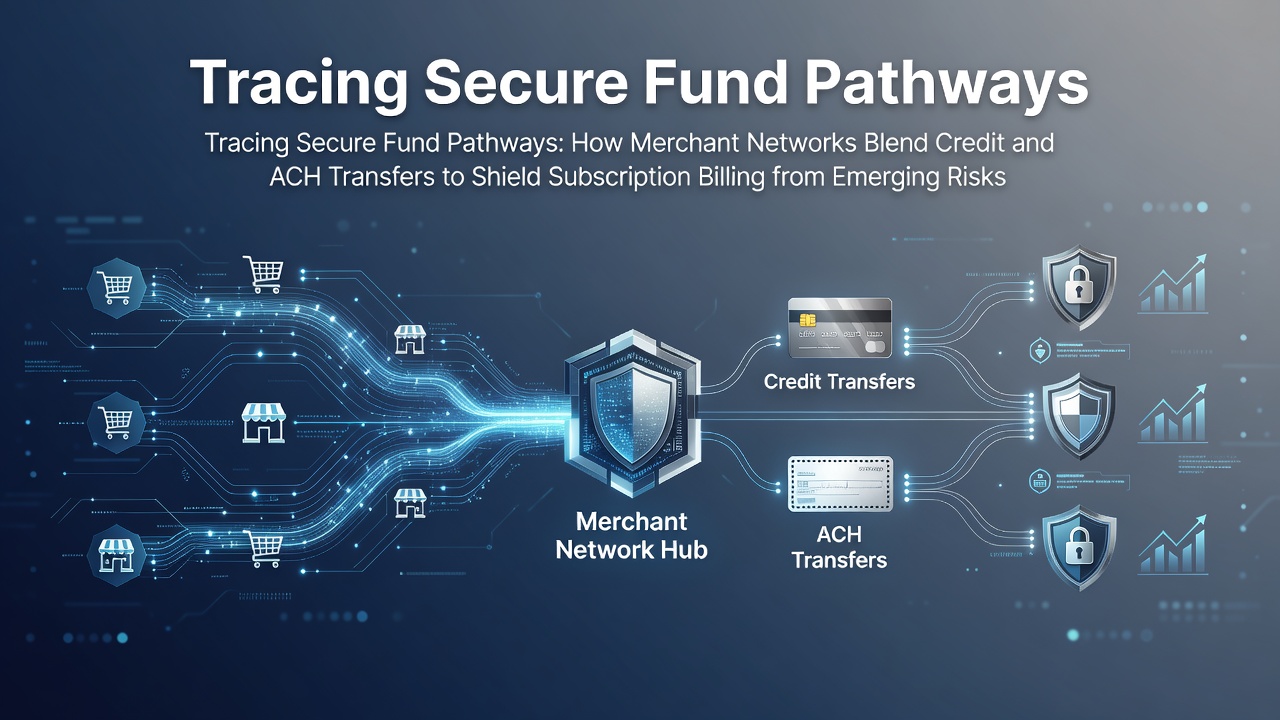
Integrated Financial Channels for Subscription Stability: The Synergy of Credit and ACH Transfers in Risk Reduction
Merchant networks continue to refine their approaches to subscription billing by combining credit card processing with ACH transfers in coordinated sequences that address multiple layers of operational risk. These blended pathways allow platforms to route recurring charges through verification steps that draw on the distinct strengths of each method, where credit offers immediate authorization checks and ACH supplies batch settlement with lower reversal rates once cleared. Data from industry analyses indicate that such integration reduces exposure to chargeback spikes and failed collection attempts that have grown more common in automated retail environments.
Core Mechanics of Blended Routing
Systems operators establish rules that sequence initial subscription activations through credit channels for rapid identity confirmation, then shift subsequent cycles to ACH when account details have passed initial screening. This sequencing draws on credit networks' real-time fraud scoring tools while leveraging ACH's lower fee structure for high-volume repeat deductions, and it creates checkpoints where discrepancies in customer behavior trigger fallback to the alternate rail. Observers note that platforms implementing these switches report steadier collection rates because ACH entries carry extended return windows that discourage certain dispute patterns common with credit instruments.
Payment processors embed logic that monitors transaction velocity and device signals, routing high-risk attempts away from ACH to prevent extended settlement exposure. Credit pathways absorb the initial verification load because their networks maintain extensive negative-file databases updated across issuers, whereas ACH relies more on prior authorization forms and bank-level screening. Researchers at academic institutions have documented how these layered decisions improve overall authorization success without elevating operational costs beyond thresholds observed in single-rail setups.
Adaptations Observed Through October 2026
By October 2026, several merchant acquirers had updated their gateway configurations to incorporate enhanced data fields required under evolving network rules for both credit and ACH streams. These updates allow subscription platforms to attach tokenized credentials that travel with the payment record, enabling downstream banks to apply consistent risk scoring regardless of which rail carries the transaction. Figures released through regulatory summaries show measurable declines in unauthorized recurring entries once token-linked routing became standard across major US processors.
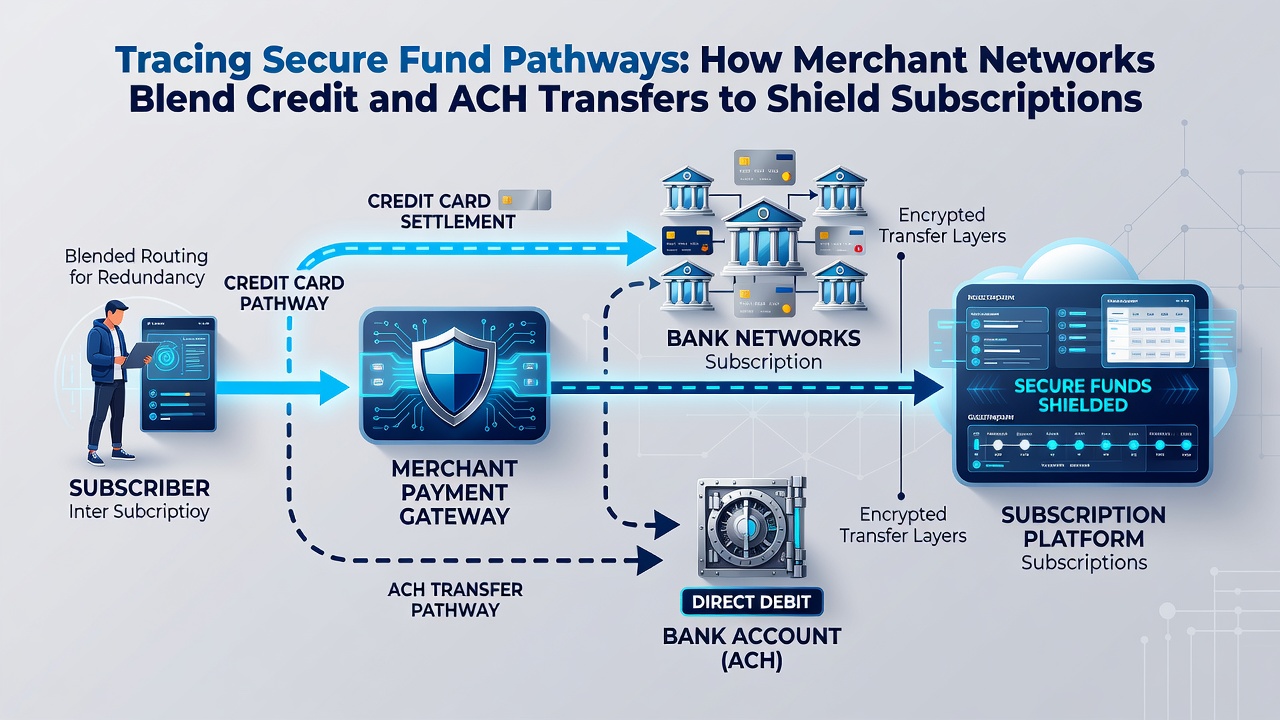
Retail operators who adopted the dual-rail model early encountered fewer interruptions when new authentication mandates took effect, because credit rails already supported dynamic 3-D Secure prompts while ACH channels maintained standing authorizations tied to verified bank accounts. The combination therefore buffered platforms against sudden compliance shifts that might otherwise require full re-onboarding of customer payment methods. Studies tracking these transitions found that blended systems maintained higher retention metrics compared with credit-only or ACH-only configurations during the same period.
Verification Layers Across Networks
Verification occurs at multiple points where credit authorization responses feed into ACH prenotification files, allowing banks to flag potential mismatches before actual funds move. This cross-checking reduces the incidence of returns coded as unauthorized, which carry higher processing penalties under NACHA operating rules. Platforms that embed these cross-references within their billing engines report fewer manual reviews and faster reconciliation cycles because exception items surface earlier in the settlement window.
Take one processor that synchronized its credit token vault with ACH originator IDs: the linkage permitted automatic flagging of accounts showing velocity anomalies on credit that then prompted secondary ACH validation steps. Such patterns illustrate how the two channels reinforce each other rather than operate in isolation, creating a feedback loop that strengthens overall subscription resilience. Government data sources, including summaries from the Consumer Financial Protection Bureau, track corresponding reductions in recurring-payment disputes when these verification alignments are in place.
Settlement Timing and Risk Allocation
Credit settlements typically clear within one to three days, giving platforms quicker visibility into initial success rates, while ACH batches settle on a next-day or two-day schedule that aligns with payroll and invoice cycles common among subscribers. By alternating or sequencing the two, networks distribute settlement risk so that a single rail's delay does not cascade across an entire billing cohort. This timing flexibility proves useful during holiday periods or economic shifts when consumer account balances fluctuate more widely.
One documented case involved a subscription service that moved high-volume, low-value renewals exclusively to ACH after credit pre-authorizations confirmed account validity: the shift lowered per-transaction costs while preserving credit rails for new sign-ups that required immediate fraud screening. Data indicates this selective allocation contributed to improved margins without compromising collection reliability over multi-year observation windows.
Conclusion
Merchant networks achieve more stable subscription outcomes when credit and ACH pathways operate as complementary components rather than standalone options. The documented routing strategies, verification cross-checks, and settlement sequencing practices continue to evolve in response to network rule changes and observed risk patterns. As platforms refine these integrations, the resulting fund-flow architectures provide measurable buffers against the specific vulnerabilities that affect recurring billing streams across US retail ecosystems.