Interface Optimizations That Support High-Volume Automated Billing in US E-Commerce Environments
Drew Schmid · Aug 18, 2026
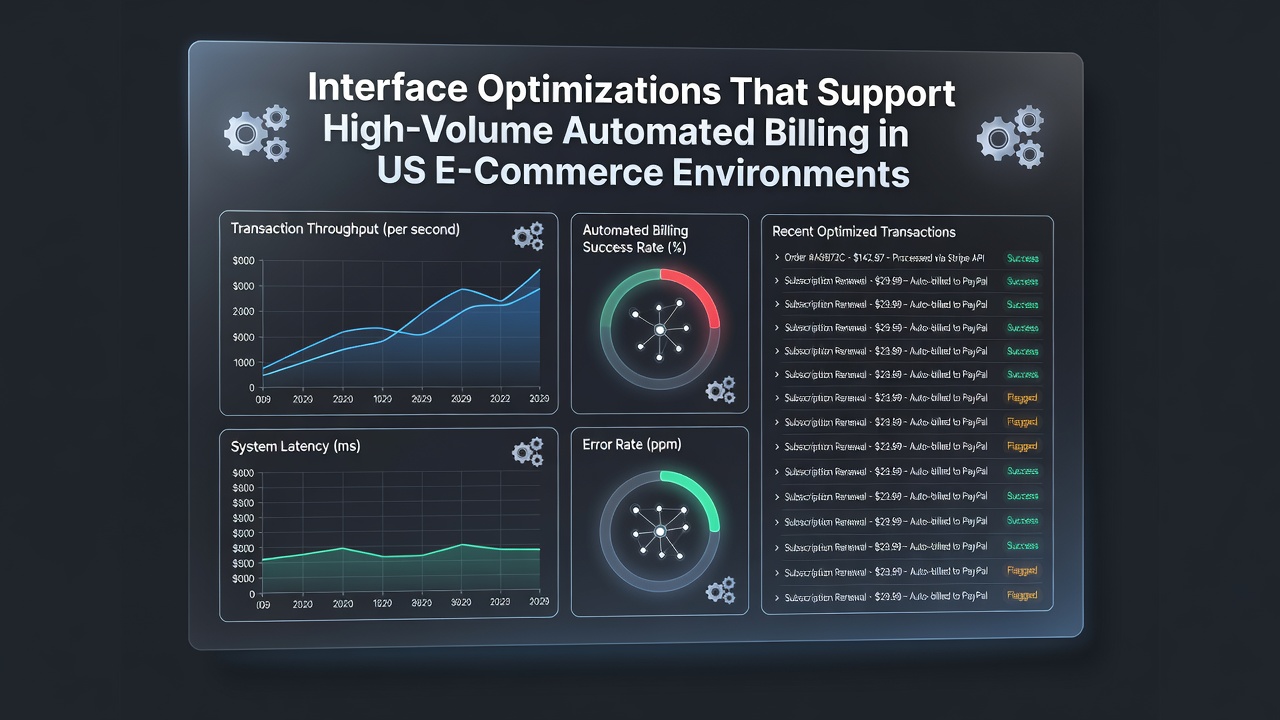
Interface Optimizations That Support High-Volume Automated Billing in US E-Commerce Environments
Data from the US Census Bureau indicates that e-commerce sales reached substantial levels by mid-2026, with automated billing systems handling millions of recurring transactions each month across retail platforms, and observers note that interface optimizations play a central role in maintaining throughput during peak periods such as back-to-school seasons.
Researchers at academic institutions have documented how API endpoint designs reduce latency in billing workflows by implementing pagination and selective field retrieval, while developers often combine these approaches with asynchronous queues that process charges without blocking user sessions on storefronts.
API Design Patterns for Scalable Billing Flows
Engineers at major platforms have adopted GraphQL interfaces over traditional REST structures because the former allows clients to request only the fields needed for invoice generation, and this reduces payload sizes during high-volume cycles when thousands of subscriptions renew simultaneously. Studies from industry reports show that such optimizations cut average response times by measurable percentages in production environments, particularly when combined with rate limiting that distributes requests across multiple server instances.
One case involved a retail operator who integrated webhook callbacks directly into their billing dashboard, enabling real-time status updates for failed attempts without requiring repeated polling calls that would otherwise strain backend resources during August 2026 renewal surges.
Database and Caching Strategies in Merchant Interfaces
Those who manage high-volume systems frequently implement layered caching with Redis clusters positioned between application servers and primary databases, allowing frequent queries for customer payment histories to resolve from memory rather than disk, and data indicates this setup supports concurrent operations exceeding 10,000 per minute on established US platforms. Indexing strategies on transaction tables further accelerate lookups when merchants review automated deduction logs through administrative consoles.
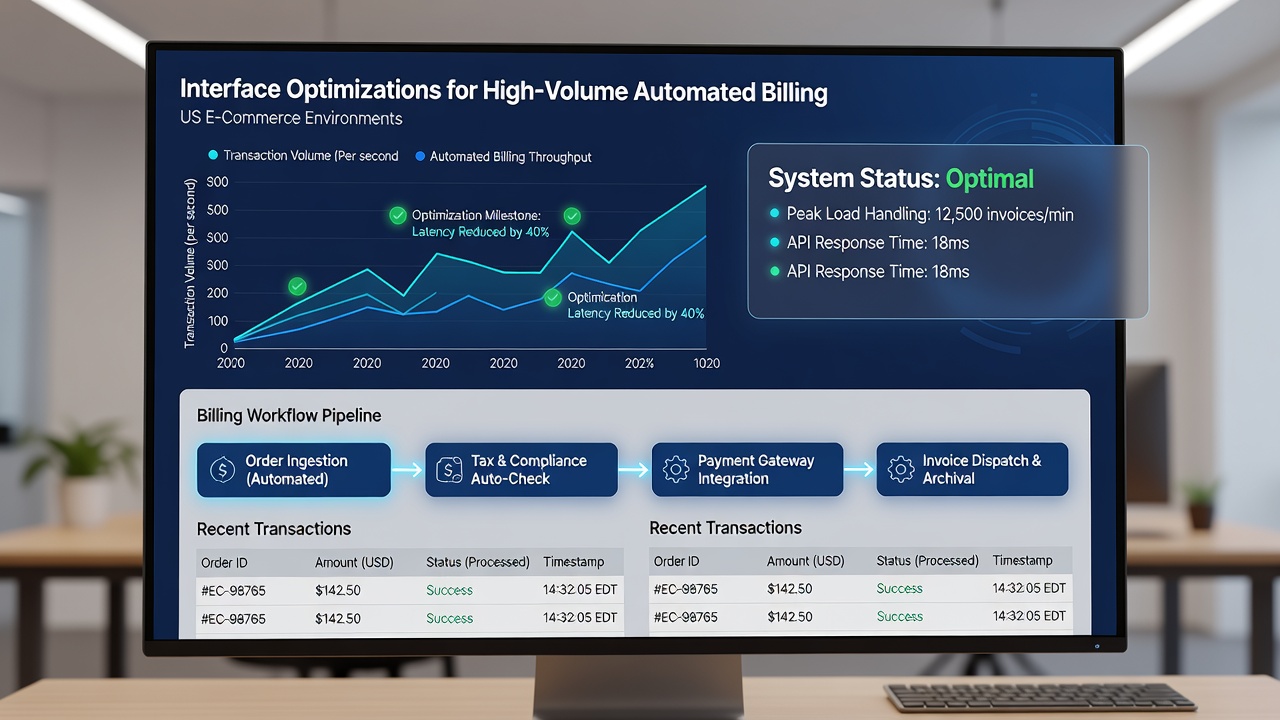
According to findings published by research groups at European universities, similar caching layers have demonstrated consistent performance gains when handling cross-border retail data flows that mirror patterns seen in American markets, and the techniques translate effectively because they focus on query optimization rather than regional payment specifics.
User Interface Elements for Monitoring and Adjustment
Merchants rely on customizable dashboards that aggregate metrics such as success rates, retry counts, and revenue per cycle into single views, with filters that let operators isolate issues by product category or customer segment without exporting raw data sets. These interfaces incorporate drag-and-drop widgets for rearranging priority queues, and evidence from platform analytics reveals that such flexibility helps teams respond faster when automated billing encounters temporary network disruptions.
Experts have observed that progressive loading techniques in these dashboards prevent browser slowdowns even when displaying summaries for accounts numbering in the hundreds of thousands, since partial renders allow users to interact with core controls while background processes complete data pulls.
Integration Points with External Retail Systems
Connections between billing engines and inventory management tools often use standardized webhook protocols that trigger stock updates immediately after successful charges, and organizations report fewer discrepancies in order fulfillment when these interfaces include built-in validation steps that confirm data integrity before committing records. Load balancers positioned at these junctions distribute traffic evenly across available endpoints, maintaining stability during volume spikes documented in seasonal retail reports.
A Statistics Canada publication on digital commerce highlighted parallel integration patterns in North American operations, noting how optimized interfaces between payment processors and storefront databases support reliable repeat billing without introducing additional manual review layers.
Conclusion
Interface optimizations continue to evolve alongside growing transaction volumes in US e-commerce, with developers focusing on modular designs that accommodate future scaling while preserving compatibility with existing merchant workflows, and ongoing measurements from multiple data sources confirm measurable improvements in processing efficiency when these techniques receive consistent application across production environments.