Retailers Connecting Corporate Bank Feeds Directly to Checkout Systems for Automated Periodic Charges Under Strict Data Security Rules
Devon Reed · Aug 18, 2026
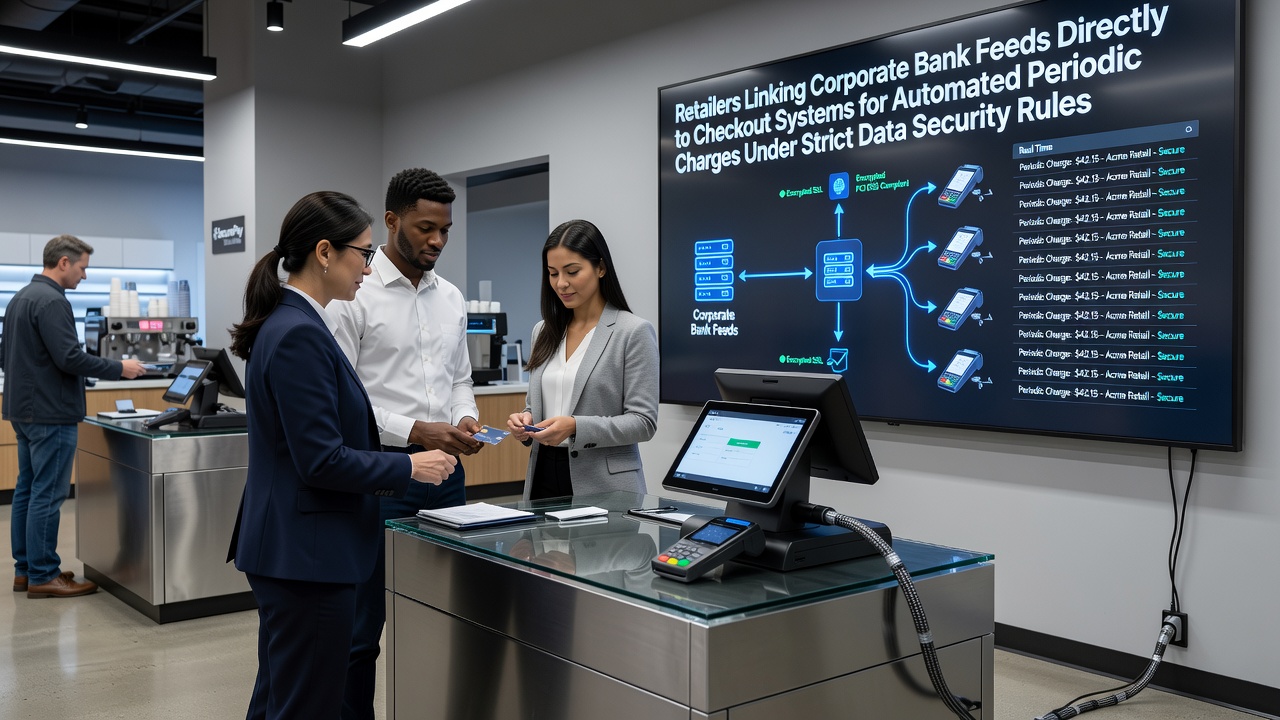
Retailers Connecting Corporate Bank Feeds Directly to Checkout Systems for Automated Periodic Charges Under Strict Data Security Rules
Retailers across the United States have expanded direct connections between corporate bank feeds and digital checkout platforms, which enables automated periodic charges while maintaining compliance with data security regulations. These integrations allow businesses to pull funds from customer accounts on a recurring schedule without routing every transaction through traditional payment gateways, and data from industry reports shows adoption rates rising steadily through 2025 into August 2026.
Corporate bank feeds transmit account details and transaction authorizations in structured formats that comply with standards such as NACHA operating rules for ACH transfers. Retail systems receive these feeds through encrypted APIs that map directly to checkout logic, which triggers deductions at set intervals like monthly or quarterly. Observers note that this setup reduces intermediary steps compared with gateway-only models, yet it requires precise alignment with security protocols to protect sensitive banking information.
Mechanics of Direct Bank Feed Integration
Systems establish a secure channel where retailer software authenticates with bank servers using token-based credentials rather than storing full account numbers locally. When a customer completes an initial checkout, the platform captures consent and routing details, then schedules future pulls through the bank feed. This process handles both credit and debit account flows, while automated reconciliation matches incoming charges against expected revenue streams. Researchers at payment technology firms have documented cases where direct feeds cut processing latency by several seconds per transaction, which accumulates across high-volume subscription models.
Security rules mandate end-to-end encryption during feed transmission along with regular penetration testing of the connection points. Retailers must segment their networks so that bank data never mixes with general customer databases, and access logs undergo independent audits. In August 2026, updated guidelines from the Consumer Financial Protection Bureau emphasize real-time monitoring for anomalous activity on these direct links, which builds on earlier frameworks for electronic funds transfers.
Data Security Requirements and Compliance
Strict rules derived from PCI DSS and related financial data protection standards govern how retailers handle bank feed information. Systems apply tokenization at the point of capture, replacing account identifiers with unique tokens that carry no usable value if intercepted. Firewalls and intrusion detection tools monitor the dedicated channels between checkout servers and corporate banking endpoints, while multi-factor authentication governs any manual overrides. Studies from academic research centers indicate that organizations maintaining these controls experience fewer incidents of unauthorized access compared with less segmented architectures.
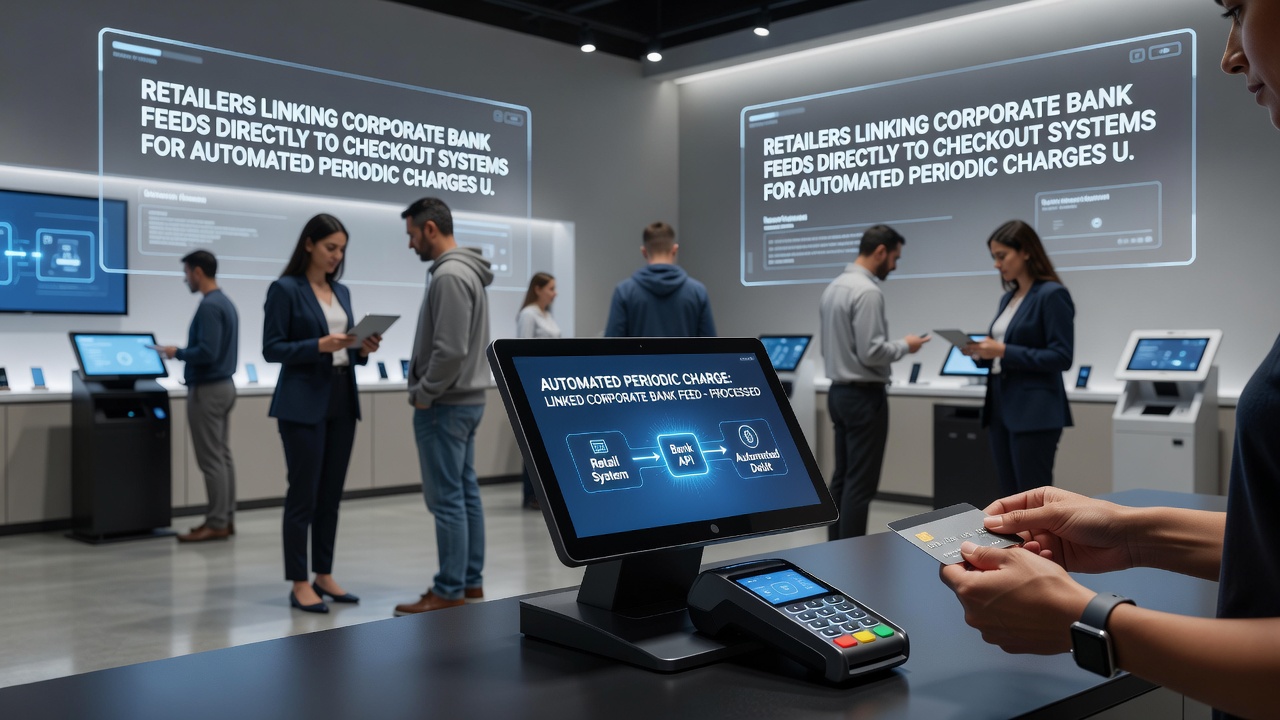
Retail operations also align with broader electronic payment regulations that require clear customer disclosure of recurring charge terms. Automated systems generate confirmation messages before each scheduled deduction, and customers retain opt-out mechanisms through the same checkout interface. Compliance teams track these notifications as part of audit trails that demonstrate adherence to consumer protection statutes.
Operational Examples Across Retail Sectors
One subscription-based grocery delivery service implemented direct bank feeds in early 2025, linking its checkout system to multiple corporate banking partners for weekly produce box charges. The integration processed over 200,000 recurring transactions monthly by August 2026, with built-in velocity checks that flag unusual patterns before funds move. Another example involves a fitness equipment retailer that routes equipment rental payments through similar feeds, which allows the company to bypass additional gateway fees while maintaining full logging for regulatory review.
Those who manage these setups often coordinate with financial institutions that provide sandbox environments for testing new charge cycles. Data from the Federal Reserve shows growth in direct ACH origination volumes tied to retail platforms, reflecting broader shifts toward streamlined billing infrastructure.
Challenges in Scaling These Connections
Retailers encounter hurdles when bank feed formats vary across institutions, which necessitates custom mapping layers that add development overhead. Latency spikes during peak billing periods can disrupt automated schedules, and security teams must continuously update encryption certificates to stay ahead of evolving threats. Yet organizations that invest in standardized API frameworks report smoother operations, according to analyses from trade research groups.
Regulatory updates scheduled for late 2026 may introduce additional reporting requirements for cross-border bank feeds, which would affect retailers serving international customers. Preparation involves mapping current data flows against anticipated rules to identify gaps before enforcement begins.
Conclusion
Direct linkages between corporate bank feeds and retail checkout systems continue to support automated periodic charges under rigorous data security frameworks. Retailers that follow established protocols for encryption, tokenization, and monitoring achieve reliable recurring revenue streams while satisfying regulatory expectations. As integration patterns mature through 2026 and beyond, the emphasis remains on maintaining secure, auditable pathways that protect both business operations and customer financial information.