US Online Payment Processing: Systems, Infrastructure, and Market Developments
Jakob Russell · Aug 23, 2026
US Online Payment Processing: Systems, Infrastructure, and Market Developments
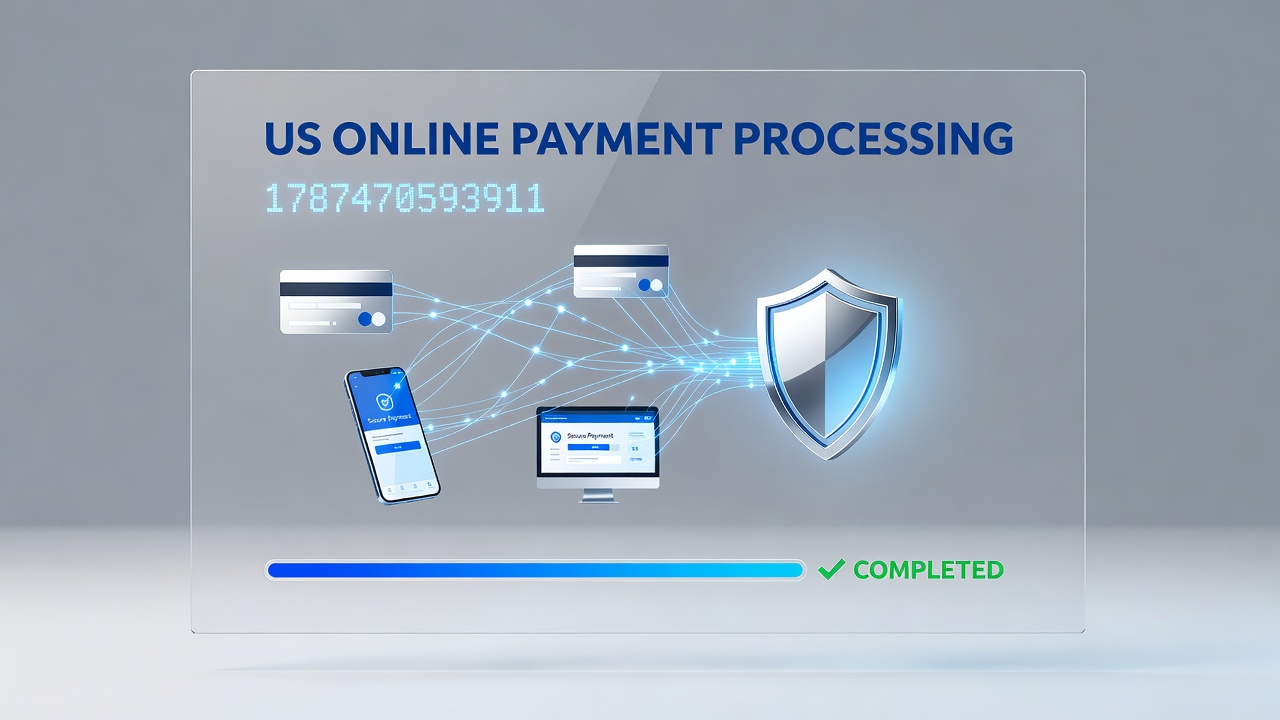
US online payment processing encompasses the networks, banks, and technology providers that handle authorization, clearing, and settlement of electronic transactions between consumers and merchants across digital channels, and data from the Federal Reserve shows steady growth in these volumes through the mid-2020s.
Processors route requests through card networks such as Visa and Mastercard or alternative rails including the Automated Clearing House operated by NACHA, while settlement occurs between acquiring banks that serve merchants and issuing banks that manage consumer accounts.
Core Components of the Processing Chain
Authorization begins when a customer submits payment details at checkout, after which the merchant's gateway forwards the request to the payment processor for verification against issuer records, and this step typically completes in seconds before funds move during clearing and settlement cycles that follow on a separate timeline.
Acquirers maintain merchant accounts that aggregate daily transactions, apply interchange fees set by card networks, and handle chargebacks when disputes arise, whereas processors supply the technical connections that link storefront software to banking systems without requiring merchants to negotiate directly with multiple financial institutions.
Payment Methods and Adoption Patterns
Credit and debit cards continue to dominate online volume according to industry reports, yet digital wallets such as Apple Pay and Google Pay have expanded their share by tokenizing card credentials at the device level, and real-time options like FedNow have gained traction for person-to-business transfers since their broader rollout.
Buy-now-pay-later services integrate into checkout flows through partnerships with lenders, splitting purchases into installments while the merchant receives full payment upfront minus fees, and data indicates these options appear most frequently in retail categories with higher average order values.
Regulatory Framework and Compliance Requirements
Federal rules enforced by the Consumer Financial Protection Bureau and the Federal Trade Commission establish standards for disclosure, error resolution, and data protection, while state attorneys general pursue additional enforcement actions that affect how processors design their fraud-monitoring tools and consumer-facing interfaces.
PCI DSS requirements mandate encryption, access controls, and regular audits for any entity that stores, processes, or transmits cardholder data, and non-compliance can result in fines passed along the chain from card networks to acquirers and ultimately to merchants, according to documentation from the PCI Security Standards Council.
Market Scale and 2026 Developments
Transaction values processed through US online channels reached multi-trillion-dollar levels by the middle of the decade, with card-not-present activity comprising a growing percentage of total card volume as reported in Federal Reserve payments studies, and observers note continued infrastructure investments aimed at reducing settlement times.
In August 2026 several large processors completed integrations that expanded support for instant payment rails alongside traditional batch processing, allowing merchants to offer customers same-day fund availability in select use cases while maintaining separate reconciliation paths for each rail.
Security Protocols and Data Handling
Tokenization replaces primary account numbers with unique identifiers that limit exposure if a breach occurs at the merchant or processor level, and end-to-end encryption protects data during transmission between the consumer device and the issuer's authorization system, practices that align with guidelines from both domestic regulators and international standards bodies.
Monitoring systems employ machine-learning models trained on historical patterns to flag unusual activity, and these tools operate under oversight that balances fraud reduction against false-positive rates that can affect legitimate transactions, with performance metrics tracked through industry benchmarking groups.
Conclusion
US online payment processing rests on interconnected networks of banks, processors, and technology providers that manage authorization, clearing, and settlement while meeting layered regulatory and security obligations, and ongoing expansions of real-time capabilities continue to reshape settlement timelines without altering the foundational division of responsibilities across the payment chain.